
The 21st Century ROAD to Housing Act made it through Congress with a housing headline, but Section 902, “Keeping Deposits Local,” is the piece that ALCOs should be focusing on. It rewrites how much reciprocal deposits are attached with the brokered deposit label, and for community banks leaning on reciprocal deposits to manage large-dollar relationships and public-fund pledging, that reclassification changes the liquidity math. This has been a long time coming: institutions have argued for years that reciprocal deposits behave nothing like the brokered deposits the classification was originally written to police, and Section 902 is Congress finally agreeing.
What Actually Changed?
Prior law capped the reciprocal deposit exclusion from brokered treatment at a flat threshold (lesser of 20% of total liabilities or $5B) and reserved the expanded exemption for CAMELS Composite 1- or 2-rated institutions. Section 902 replaces that flat cutoff with a graduated scale tied to total liabilities and, notably, opens the door to Composite 3-rated banks for the first time. That second change matters as much as the tiers themselves: an institution working through a supervisory downgrade no longer automatically loses access to ‘non-brokered’ designation.
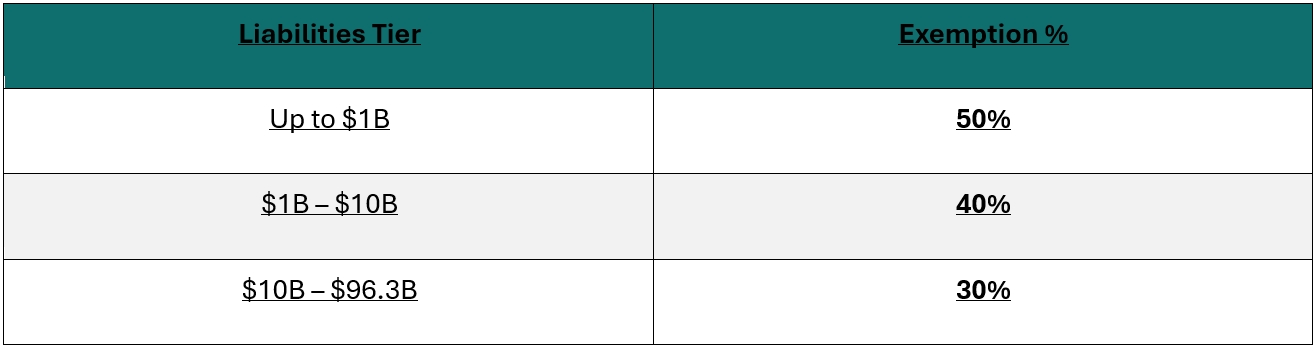
The law also directs the FDIC and Federal Reserve to jointly study reciprocal deposits and report their findings to Congress within six months of enactment, a clear signal that today’s tiers are a starting point, not the last word. Expect follow-on rulemaking once that study lands.
Taylor Advisors’ Take:
This is common-sense reform. It gives banks more flexibility to manage liquidity risk tied to uninsured deposits and public-fund pledging, and it recognizes that a bank running a disciplined reciprocal program should not be penalized the same as one relying on more volatile brokered deposits. But don’t confuse regulatory relief with immunity. A large, concentrated allocation to reciprocal deposits still carries outflow risk in a stress event — the brokered label was never the only thing standing between your bank and a liquidity problem, and removing it doesn’t remove the underlying risk.
You have already subscribed to distributions. Thank you for your interest in our publications!